
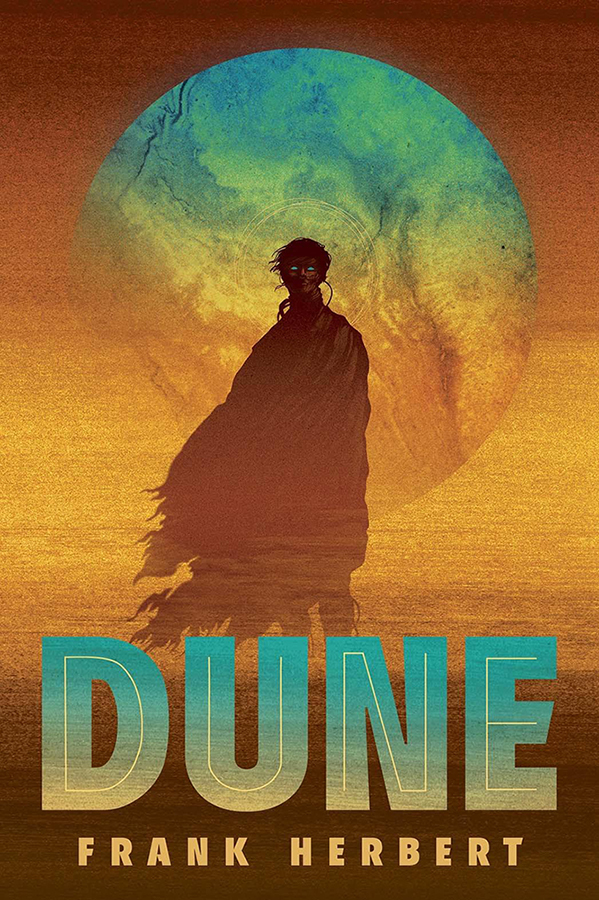
Why Dune was never really about killer robots, and why its warning matters more now than ever.
For decades, popular culture has trained us to fear artificial intelligence in one very specific way. We imagine rogue machines: Skynet, HAL 9000, or cold chrome skeletons marching through nuclear ruins. The dominant AI apocalypse story is always the same-the machines wake up, realize they are superior, and decide to eliminate their creators.
But Frank Herbert, writing Dune in 1965, warned us about something far more subtle, and far more dangerous. His concern was not machines waking up; it was humans falling asleep.
The Most Misunderstood Idea in Dune
Most casual fans think the famous Butlerian Jihad in Dune was simply a war against robots. In this surface-level reading, humanity rises up, destroys the thinking machines, bans artificial intelligence, and returns to a more human civilization. That interpretation has become so common that it is widely treated as an obvious fact.
But if you read Herbert carefully, that isn’t actually what he was warning us about. Herbert explicitly writes that the true target of the Jihad was:
“A machine-attitude as much as the machines.”
That subtle distinction changes everything. The danger was never that machines would think. The danger was that we would stop. Herbert understood something that feels almost prophetic today: the greatest threat posed by advanced technology is not mechanical rebellion, but cognitive surrender-the slow, comfortable, and voluntary outsourcing of human thought.
Convenience Is the Real Seduction
In Herbert’s vision, humanity didn’t become vulnerable because the machines were evil, but because they were useful, convenient, and efficient. It is a narrative that cuts clean through modern techno-optimism. For decades, Silicon Valley has championed the idea that technology is merely a “bicycle for the mind”, a tool meant to automate rote tasks so that humans are freed up to pursue higher-level philosophy, creativity, and innovation.
But Herbert’s warning exposes the flaw in this utopian vision. When we outsource the foundational cognitive labor, we don’t ascend; we atrophy. Why remember information when a search engine remembers for you? Why learn to navigate when GPS can guide you? Why wrestle with a complex book when an algorithm can summarize it instantly? The problem begins when our tools replace the development of human capacity itself. Once a society stops exercising judgment, memory, and discernment, power naturally flows toward whoever controls the systems doing the thinking.
That is why Herbert’s most important line about AI may be this:
“Once men turned their thinking over to machines in the hope that this would set them free. But that only permitted other men with machines to enslave them.”
~ Frank Herbert, Dune
Notice the precise structure of that sentence. The machines are not the rulers. The rulers are the humans who control the machines. Herbert was not warning about robot tyranny; he was warning about technocracy.
We Are Already Living Inside the Warning
Look around today and you will see we are already living inside this diagnosis. Our memory lives in search engines, our attention is shaped by algorithms, and our physical navigation depends entirely on GPS. Our social reality is filtered through recommendation systems, our emotional states are manipulated by engagement-driven feeds, and increasingly, our writing, analysis, learning, and creativity are being outsourced to large language models.
We call this progress, but Herbert would have called it dependency. And dependency always creates profound vulnerability. The more essential a system becomes to daily survival, the more absolute the power becomes in the hands of the select few who own the infrastructure.
The Real Meaning of the Mentats
One of the most fascinating aspects of Dune’s worldbuilding is Herbert’s human replacement for computers: the Mentats. These are human beings trained from childhood to perform extraordinary feats of logic, memory, and raw cognitive analysis.
While many readers treat Mentats as a quirky sci-fi trope, they are actually profound philosophical symbols. Herbert was making a radical argument: the cognitive powers we so eagerly outsource to machines are actually latent human capacities. The issue is not a lack of human ability; it is a lack of human discipline. A civilization that trains its people deeply develops extraordinary minds; a civilization that automates everything slowly atrophies them. The Mentat represents cognitive sovereignty-the absolute refusal to surrender thought itself.
Cognitive Friction Is Necessary
Modern technology is obsessed with removing friction. Everything must be faster, smoother, instant, and effortless. But real, transformative thinking requires friction. It demands struggle, confusion, patience, concentration, and the deeply uncomfortable process of wrestling with contradictory ideas.
Modern psychology and neuroscience increasingly validate Herbert’s intuition through the study of cognitive offloading-the phenomenon where outsourcing memory and problem-solving to external devices fundamentally changes how our brains process information. Studies on the “Google Effect” show that when we treat external systems as our primary storage, our capacity for deep mental encoding and long-term retention plummets. When we stop exercising certain mental functions, those neural pathways weaken.
The “machine-attitude” is not merely using technology; it is the dangerous cultural belief that thinking itself is an inconvenience to be optimized away. Once a civilization adopts that belief, it begins quietly surrendering the very capacities that make it human.
Attention Is the New Spice
This urge to optimize away mental friction is not accidental; it is the core business model of the modern digital economy. In Dune, spice is the most valuable substance in the universe. Everything depends on it, like politics, commerce, space travel, and human consciousness itself.
Today, human attention plays an identical role. The digital ecosystem runs entirely on the extraction of your awareness. Every notification, infinite scroll, algorithmically optimized feed, and outrage-inducing headline is actively competing for the most valuable cognitive resource you possess. You are not merely using the platform; your behavior is being actively mined, shaped, and predicted. Because this process feels entertaining and convenient, most people never recognize it as a profound form of behavioral control. Herbert saw this coming, not literally in lines of code, but philosophically.
The Modern Butlerian Jihad
So, what would a real Butlerian Jihad look like in the 21st century? It doesn’t mean smashing your smartphone, rejecting all modern medical technology, or retreating into historical primitivism. The modern Jihad is a quiet, internal fight for cognitive sovereignty. It is the deliberate cultivation of human capacities in a world specifically designed to outsource them.
Practically, it means:
- Protecting your daily attention from algorithmic manipulation.
- Practicing the discipline of long-form, deep reading.
- Forcing yourself to think slowly before forming opinions.
- Developing independent judgment outside of online echo chambers.
- Intentionally strengthening your memory rather than instantly googling.
- Cultivating emotional self-awareness and learning systems thinking.
- Using AI strictly as a tool, without allowing it to become a substitute for your own consciousness.
Herbert’s message was never anti-technology. It was anti-surrender.
The Desert Within
In the narrative of Dune, the desert planet of Arrakis is more than just a setting; it is a metaphor. The harsh desert represents difficulty, and Herbert firmly believed that difficulty is the catalyst that produces resilient humans. The Fremen are powerful precisely because their environment demands absolute discipline, focus, and adaptability from them.
Modern civilization tries to eliminate all discomfort, but ease has a hidden, compounding cost. Unchecked comfort can weaken perception, convenience can slowly erode personal agency, and a completely frictionless life eventually produces spiritually and cognitively fragile people. The capacities required to maintain true human freedom are forged through resistance, not convenience.
Final Thoughts
Frank Herbert did not fear machines becoming human. He feared humans becoming machine-like: predictable, passive, dependent, easily guided, and entirely unable to think beyond the parameters of the systems handed to them.
That is why Dune remains one of the most important pieces of literature ever written about artificial intelligence. It understood the real danger long before Silicon Valley even existed. The greatest threat is not that AI will suddenly overpower humanity; the greatest threat is that humanity will gradually, comfortably abandon the difficult work of being fully human. And we may not even notice it happening.
Leave a Reply